~350K
בוגרים בגילי 25-64 במטרופולין חיפה ללא תעודה אקדמית: הבסיס שאליו אפשר לפנות45
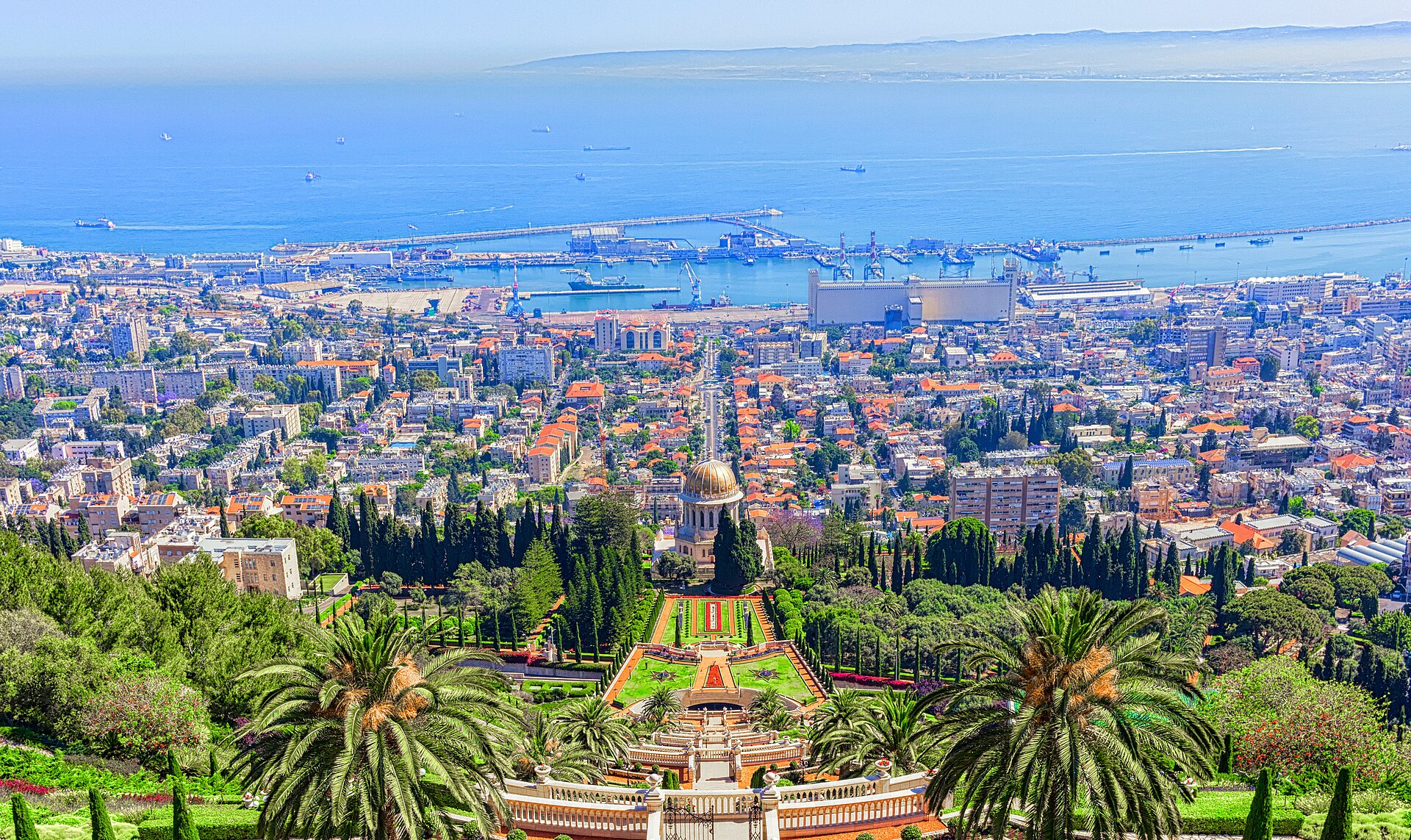
חיפה מקבלת 75 על שמונת היסודות שלהלן, וזהו המדד היחיד שמודד אותם. אף דירוג עולמי אינו מפריד את חיפה כלל: Startup Genome, Kearney, Savills ו‑JLL מכניסים אותה תחת "ישראל" או "תל אביב". הפער בין 75 על היסודות לבין הכרה חיצונית כמעט אפסית הוא בדיוק התמחור מחדש שהמסמך הזה נועד לסגור.
לראות בדיוק איך מחושב הציון ←ציון משוקלל מנומק משמונה ממדים ממוקרים, עם משקלות (יכולת הסבה 22%, הון, חדשנות, כישרון וכלכלה 13% כל אחד, שוק ואיכות חיים 9% כל אחד, בריאות 8%). זוהי הערכה מכוילת עם טווח רגישות של המחברים, לא מדידה עם רווח סמך סטטיסטי, והמודל המלא, כל ציון ממד והרגישות למשקלות נמצאים ב עמוד המתודולוגיה. דירוג השוואתי מול תל אביב, ירושלים והמוקדים העולמיים הוא השלב הבא.
חיפה נסחרת בדיסקאונט ביחס ליסודות שלה משום שקיים פער מידע, לא פער איכות. זהו אשכול תכנון שבבים ואקדמיה מהשורה הראשונה, מתומחר בכ‑40% מתחת לתל אביב, עם האבטלה הנמוכה במדינה. הסיפור העמוק יותר: זהו אחד מכוחות העבודה הניתנים ביותר להסבה מקצועית בישראל, עיר שיכולה לבצע בקנה מידה גדול בדיוק את המעבר מעבודה תאגידית לבנייה עם AI.
הנכסים מתומחרים כאילו היו שאריות של תל אביב. הם אינם. ארכיטקטורת Core של Intel נולדה כאן. IBM מפעילה כאן את המעבדה הגדולה ביותר שלה מחוץ לארצות הברית. הטכניון הצמיח ארבעה חתני פרס נובל ויותר מאלף סטארט‑אפים. ו‑17% מהעובדים המקומיים כבר בהייטק, פי 1.5 בערך מהשיעור הארצי, על בסיס של עובדי ידע בעלי תואר שאפשר ללמד אותם לבנות.
כל נתון להלן נושא שנה ומקור מזוהה. במקום שבו מקורות רשמיים חלוקים, מהדורה זו מדווחת טווח. במקום שבו מספר נגזר ממדדי משנה, הוא מסומן כהערכה. המשמעת הזו היא המוצר.
יחידת הניתוח היא מטרופולין חיפה, כפי שהלמ"ס מגדירה אותה. כלומר 1,032,463 בני אדם ב‑109 יישובים (2024), מול כ‑297,000 בעיר עצמה. ההגדרה אינה שלנו: הלמ"ס מכניסה יישוב למטרופולין כאשר לפחות 20% מתושביו המועסקים נוסעים לגרעין התעסוקה של חיפה, ולטבעת הפנימית ב‑30%. גם יקנעם עילית וגם קריית טבעון, שבה Nvidia בונה, נמצאות בטבעת ה פנימית . מגדל העמק ונצרת אינן עומדות בקריטריון ואינן נכללות כאן, אף שנהוג לכנותן ברישול "אזור חיפה".
נתוני הנסיעה לעבודה הם הסיבה לכך שזה משנה. 48.5% of the 194,500 jobs located in Haifa are held by non-residents, ובעוד שרק 28.3% מתושבי חיפה המועסקים עובדים מחוץ לעיר שלהם, 68.9% מתושבי קריית אתא המועסקים עושים זאת. שבעה מכל עשרה יוצאים לעבוד. מדד שיישרטט לפי גבולות מוניציפליים יחמיץ גם את המשרות וגם את האנשים, וזו טעות מדידה ולא בחירה שמרנית. במקום שבו נתון הוא עירוני בלבד או מחוזי בלבד, הוא מסומן ככזה, והמחוז אינו תחליף: מחוז חיפה מחליף את עכו, נהריה ויקנעם בחדרה ובזכרון יעקב.
כל אחד מהם עונה על אחת משלוש שאלות: האם האנשים האלה מסוגלים להתחדש, לאן הם הולכים, ומה זה ידרוש. מדדי יוקרה נעדרים כאן בכוונה. חתני פרס נובל ומספרי סטודנטים אינם אומרים דבר על השאלה אם אפשר ללמד עובד באמצע הקריירה לבנות.
המספרים האלה מזינים את הציון המשוקלל בן שמונת הממדים בראש העמוד, 75/100. הציון מתפרסם רק לצד המודל המלא שלו: כל ציון ממד, המשקלות והרגישות נמצאים ב עמוד המתודולוגיה. דירוג השוואתי מול תל אביב, ירושלים והמוקדים העולמיים הוא השלב הבא.
זה אינו סיפור על תקווה. ההייטק הישראלי מצטמצם, ה‑AI לוקח קודם כול את עבודות הכניסה והשגרה, וישראל אינה יכולה להתחרות בהוצאות של ארצות הברית וסין על תשתיות AI. היתרון היחיד שנותר הוא זה שתמיד היה למדינה: ראש, חוצפה והיכולת לבנות מהר. אז במקום לחכות שהגאות תחזור, המהלך הוא להסב את מי שנדחקו החוצה לבונים מונעי AI ולחבר אותם לעבודה כאן, בחיפה ובכל ישראל.
ההיצע פוגש את הביקוש. המיתון יוצר את שני צדי המשוואה. ההיצע הוא מאגר כישרון שנדחק החוצה: מהנדסים שפוטרו, בוגרים טריים שאינם מצליחים למצוא עבודה ראשונה ובעלי עסקים קטנים שהמדינה הותירה מאחור. הביקוש הוא כלכלה שחייבת לעשות יותר עם פחות אנשים, וזו בדיוק ההגדרה של בונה מונע AI, והביקוש הזה גלובלי ולא רק מקומי. ההסבה המקצועית היא הגשר, והיא אינה נמשכת שנים. ההכשרה שעליה זה נשען אורכת שבועות עד חודשים, כך שעובד תקוע יכול להפוך לבונה AI פרודוקטיבי בתוך רבעון אחד.
התעסוקה הכוללת בהייטק בשיא, 424,000 ברבעון הראשון של 2026, עלייה של 6.2% בשנה, אבל הצמיחה היא ביטחון ושבבים: התעסוקה בדיפ‑טק עלתה ב‑15.4% והוסיפה כ‑12,000 עובדים ברבעון אחד, בעוד רשות החדשנות רשמה את הירידה הראשונה במספר עובדי המו"פ מזה עשור, כ‑3,500 משרות פיתוח שקוצצו. מספר המועסקים בפיתוח תוכנה עומד במקום מאז אמצע 2024 בעוד דורשי העבודה שוברים שיאים. מנוע הסטארט‑אפים שבנה את אומת הסטארט‑אפ נעצר. לקוות שהוא יחזור אינה תוכנית. להסב את האנשים שהוא הותיר מאחור, ולהעסיק אותם עם AI, כן.37,40,48
קורא קשוב יבחין בשתי עובדות שנראה כי הן מבטלות זו את זו. האבטלה במחוז חיפה היא מהנמוכות בישראל, והצפון מגייס באופן גלוי: רפאל, אלביט וקמפוס Nvidia המתוכנן מוסיפים כולם אלפי משרות. אז מי בדיוק זקוק להסבה מקצועית? יש שתי תשובות, והשנייה חשובה מהראשונה.
ראשית, האבטלה היא כלי המדידה הלא נכון. איש טכנולוגיה באמצע הקריירה שנדחק החוצה כמעט אף פעם אינו נרשם כמובטל לאורך זמן. הוא לוקח תפקיד נחות יותר, יורד לעבודה קבלנית בתעריפים נמוכים, יוצא מהענף או עוזב את המדינה: כ‑8,300 עובדי טכנולוגיה עזבו את ישראל בין אוקטובר 2023 ליולי 2024, ומאז המאזן שלילי. שום דבר מזה אינו נרשם כאבטלה. הוא נרשם כ תת‑תעסוקה, יציאה מהענף ובריחת מוחות, ואף שיעור כותרתי אינו לוכד זאת, גם כאשר דורשי העבודה הרשומים בהייטק הגיעו לשיא של 16,300 בתקופת שגרה במאי 2026.
שנית, וזה חשוב יותר, ספירת גיוסים גולמית היא ההוכחה הלא נכונה, משום שהיא אינה אומרת דבר על אילו מיומנויות נרכשות. חלק גדול מהגיוס בצפון הוא ביטחוני ודיפ‑טק, לא בנייה עם AI. האות שבאמת משנה צר וחד יותר: אותו AI שמדלל שכר עבודה ברחבי ישראל הוא המיומנות היחידה שהשוק שלה מעלה מחירים, פרמיית שכר של 62% וגיוסי AI ייעודיים שהוכפלו בשנה בעוד ההייטק הכללי מצמצם כוח אדם. המבוקשים ביותר אינם אלה שהטכנולוגיה דחקה החוצה, אלא אלה שלמדו לבנות איתה. הפער הזה, בין המיומנות שנענשת למיומנות שמשולמת, הוא מה שהתוכנית הזו סוגרת. זו הסיבה שהטיעון נשען על ביקוש ליכולת ספציפית, לא על מספרי מועסקים, ולא על הצלה.37,39,46,47
הדבר היקר ביותר בחיפה אינו הבניינים שלה. אלא שחלק גדול מתושביה כבר מחזיקים בחומר הגלם, בתארים, בהרגלים הטכניים ובאנגלית, כדי שאפשר יהיה ללמד אותם לבנות עם AI. זוהי הערכה מנומקת ממדדי משנה מסומנים, לא נתון מדוד. קראו את הטווח, לא את הנקודה. לראות את המתודולוגיה המלאה ←
Why Haifa over-indexes: 17% high-tech employment (~1.5x the national ~11.5%), ~41% degree-holders, a dense academic base in the Technion and University of Haifa, and Matam anchoring global R&D. The retrainable pool is not the tech graduates, who are already technical, but the far larger base of degree-holding, non-tech knowledge workers who need to add AI to their work or reinvent entirely. The honest claim is compositional, not a ranking: Haifa combines a knowledge-occupation share above the national average, a degree base near 41%, a high-tech concentration around 1.5x the national rate, two research universities and a cost base far below Tel Aviv. Tel Aviv has a higher share of academic professionals. What Haifa has is the unusual combination, plus the balance between where its tech workers live and where they work.
The share of the workforce doing reserve duty more than doubled, from 4% to 9.4%, and reservist employees averaged about 202 days away between October 2023 and January 2026 (University of Haifa and Hilan, 345,700 employees, April 2026). The acute phase eased: by H2 2024 under 2% of high-tech workers were called up at any one time (Taub Center). But the exposure is live, not historical. Conflict with Iran resumed in February 2026 and the ceasefire lapsed in July 2026. The latent pool is large; the effective near-term pool is smaller, and any honest plan budgets for that.11
National unemployment hit 2.8% in May 2026, its lowest in 50 years, and Haifa District sits among the lowest of all districts. The more useful question for a builder movement is what industries people work in, and how close those jobs sit to building with AI.
Headcounts distinguish Haifa-site figures from company-global totals. These same multinationals carry the CSR budgets and the talent-retention pain that make them natural funders of a retraining effort.
| Employer | Employees | Scope | Note |
|---|---|---|---|
| Elbit Systems | ~20,000 global (2025) | HQ in Haifa | Haifa's largest private employer by headcount and Israel's largest defence company. Order backlog above $30B43 |
| Rafael | ~10,000 | HQ Kiryat Bialik, Haifa region | Among the largest employers in northern Israel14 |
| Intel Israel | ~9,350 (2024), below 9,000 (2025) | Haifa dev center (Matam) | Birthplace of Core, Centrino, Sandy Bridge. Contracting globally, and its planned $200M Haifa campus was cancelled: vet CSR appetite13 |
| ZIM Integrated Shipping | ~7,100 | HQ in Haifa | Global container shipping line operating ~128 vessels, of which it owns 15. The port economy in corporate form43 |
| Rambam Health Campus | 6,085 | Haifa site | 1,100 beds, northern Israel's referral center15 |
| IBM Research Haifa | ~500 at the lab | Haifa lab | IBM's largest research lab outside the US, since 1972, inside a ~3,000-strong Israel-wide R&D footprint across five sites; already powers Israeli reskilling via SkillsBuild16 |
| Amazon / AWS | hundreds | Annapurna chip center, Haifa | Designs AWS's custom silicon17 |
| Microsoft | 2,700+ in Israel (FY2023) | Haifa site | Safer CSR anchor than Intel right now. Headcount is the last published figure; expansion has been announced since17 |
This is not a satellite tech town. It is a globally load-bearing R&D core the world uses every day without knowing its name.
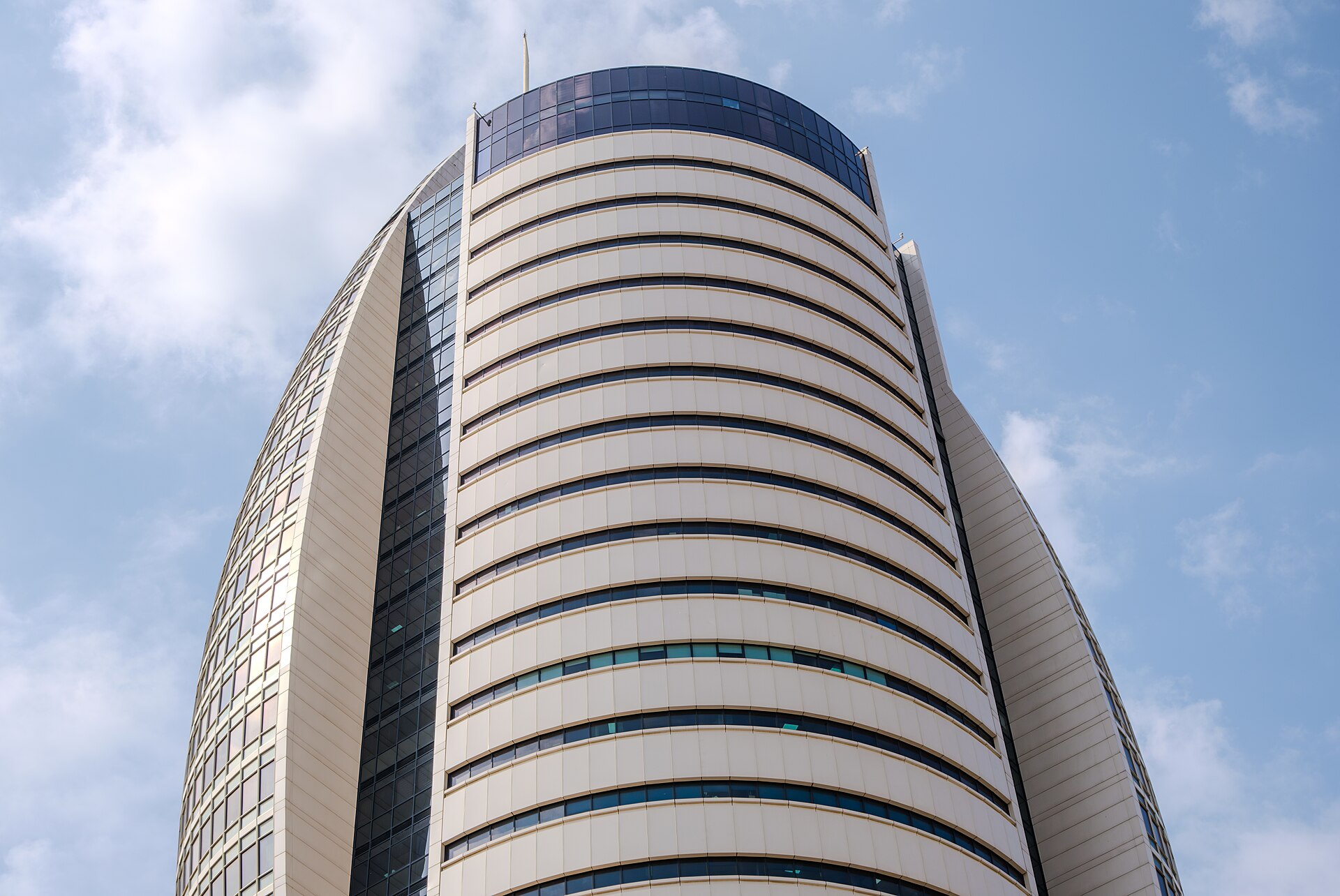

Comparing Haifa to San Francisco or Tel Aviv flatters no one and teaches nothing. The honest comparison is against other Israeli cities, and against mid-size, university-anchored, deep-tech hubs abroad. There, a clear identity emerges: Haifa is the design-and-brains node of the global chip map.
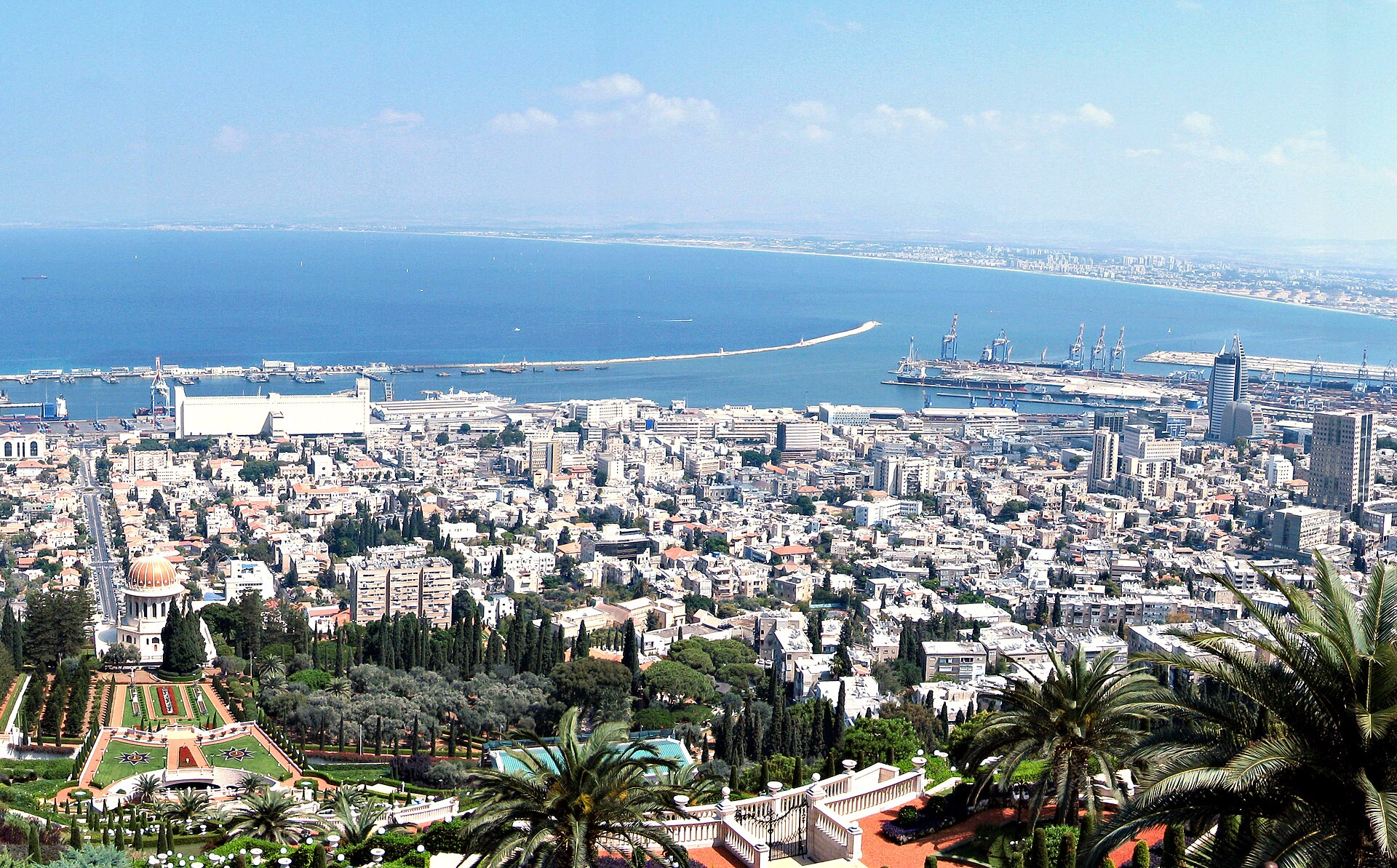
Haifa and the bay, sweeping toward Akko. Photo: Юкатан / CC BY-SA 3.0, via Wikimedia Commons
An index with no comparators is a self-assessment. Here is Haifa against the three other Israeli majors on the same measures, from the same sources, with the same definitions.
| Measure | Tel Aviv | Haifa | Jerusalem | Beer Sheva |
|---|---|---|---|---|
| High-tech share of jobs in the area | 25% | 17% | n/p | 10% (2024, down from ~13%) |
| High-tech share of employed residents | 20% | 17% | n/p | n/p |
| Socio-economic cluster (CBS, 1-10) | 8 | 7 | 2 | 5 |
| Degree-holders, ages 27-54 (CBS) | 54.7% | 44.6% | 24.6% | 30.8% |
| District unemployment (Mar 2025) | 2.2% (lowest) | n/p | 4.6% (highest) | n/p |
| Purchasing power (Numbeo, crowdsourced) | 100.8 | 140.1 (highest) | 107.8 | n/p |
| Rent index (Numbeo, crowdsourced) | 49.4 | 23.1 (lowest) | 42.2 | n/p |
| Share of all 2024 olim absorbed | n/p | 17.3% | 10.9% | 8.9% |
The three findings that matter. First, Haifa is the only Israeli city whose high-tech jobs and high-tech residents are in balance, both at 17%. Tel Aviv imports its high-tech workforce (25% of jobs against 20% of residents) and Petah Tikva imports heavily (23% against 17%). Haifa's tech economy is built on people who actually live there, which is precisely what makes a local retraining program work rather than leak. Second, Haifa has the highest purchasing power in Israel, 39% above Tel Aviv, on the lowest rents. Third, it absorbed 17.3% of all 2024 olim on under a third of Jerusalem's population. High-tech shares are Taub Center district and statistical-area averages for 2018-24, not single-year city figures; "n/p" means the source does not publish that cut. Beer Sheva's fall from ~13% to 10% in a single year is the sharpest negative in the Israeli set.1,44
| City | City pop | Avg apartment | District unemployment | Quality of life |
|---|---|---|---|---|
| Haifa | ~297,000 | NIS 1.88M | 2.5% | 172-180 (highest of big 3) |
| Tel Aviv | 474,500 | NIS 3.03M | 2.4% | ~147 |
| Jerusalem | 966,200 | ~NIS 3-4M | ~4.1% | ~144 |
| Herzliya | 110,900 | ~NIS 3.66M | 2.4% | n/a |
| Beer Sheva | 223,600 | ~NIS 1.28M | higher | n/a |
Figures 2024-2025 as sources allow. Haifa offers Tel-Aviv-adjacent tech employment at roughly two-thirds of the living cost, the cheapest housing of the majors bar Beer Sheva, and the highest measured quality of life of the big three.18
| Hub | Metro population | Tertiary, ages 25-64 | Tech employment | What it tells us |
|---|---|---|---|---|
| Haifa | 1,032,463 (CBS metro, 2024) | 38.2% academic degree; ~47% including non-academic post-secondary | ~30,000 in Matam and Yokneam; 50,000+ including the defence primaries | The reference case |
| Dresden | 564,904 | 36.8%, the lowest here | 59,700 = 7.5%, the highest share here | The closest analogue. A tech-dense metro running on a majority non-tertiary workforce |
| Leuven | 530,971 | 51.0%, the highest | 36,700 = 7.2% | The research-intensity mirror: highest attainment, highest R&D at 5.17% of GDP |
| Grenoble | 727,380 | 47.0% | ~41,500 metro (NUTS-2 region: 181,800) | Deep public research base. Not like-for-like: Eurostat reports this region at NUTS-2, an area far larger than the metro, so the metro figure is shown first |
| Eindhoven | 816,291 | 43.1% | 77,900 = 5.3% (Eurostat); Brainport itself counts 89,058 = 18.3% | Corporate-anchored rather than university-anchored |
| Waterloo | 701,568 | 35.4% bachelor's or higher | 39,400 = 11.7%, up 58.2% 2021-24 | The trajectory to aim at. Absorbs and retains its talent |
| Pittsburgh | 2,421,992 | 39.8% bachelor's or higher (25+) | 38,720 = 3.5%, down 5.7% 2021-24 | The trajectory to avoid. More graduates, more research, and it still loses them |
Why "students" is no longer a column here. Student headcount measures the pipeline. This Index is about the installed base: people aged 25 to 64 already in the labour market whose skills need re-tooling. A student column rewards university towns and tells a funder nothing about mid-career capacity. Comparability caveats, stated rather than buried: European education and tech-employment figures are only published at NUTS-2, which is much larger than the hub itself, so the Grenoble row in particular covers a region roughly nine times the size of the city's functional area. "Tertiary" is three incompatible definitions across Europe, the US and Canada, and the Israeli "academic degree" is narrower than the European measure, which is why both Israeli figures are shown. Local tech counts are not like-for-like either, which is why Eurostat and CBRE figures anchor the cross-hub comparison.19,45
The two findings that matter most. Dresden is the closest structural analogue and the strongest single argument in this table. It carries the highest high-tech employment share of the European hubs and the lowest tertiary attainment, and Haifa sits essentially on top of it. That pairing proves a tech-dense metro can run on a workforce that is majority non-tertiary, which is the entire mid-career retraining case.
And Waterloo against Pittsburgh is the warning. Near-identical tech workforces, on populations differing by more than three times. Waterloo's grew 58% in three years while Pittsburgh's shrank, and Pittsburgh produces more graduates and vastly more university research and still loses the talent. That is an absorption and retention problem, not a supply problem, which is precisely the case for retraining mid-career adults rather than building another student pipeline. Haifa, with a flat-to-shrinking core city, a growing ring and a 10,000-seat campus landing in 2031, is currently closer to the Pittsburgh trajectory than the Waterloo one. The whole point of this movement is to change which of the two it becomes.
The addressable base, stated plainly: on the order of 350,000 to 400,000 adults aged 25 to 64 in the Haifa metro do not hold a tertiary credential, and the spread across the region is 33 points, from Kiryat Tivon at 57.7% with a degree down to Kiryat Yam at 24.7%. Kiryat Ata, Kiryat Yam and Tirat Carmel alone hold roughly 137,000 people with degree rates in the mid-20s, all inside a thirty-minute commute of Matam, Yokneam and the future Nvidia campus. That population is invisible if you only report the city.45
Two tiers, stated so they are not confused. The retrainability model above counts degree-holding, desk-based workers, and the deep build track is aimed at them: that is Tier 1, where the 30-40% band applies. The ~350,000 non-tertiary adults are Tier 2, the light AI-literacy track, a different population with its own and lower conversion assumptions. The program serves both, but they are not the same people and one model does not cover both. Any cohort, cost line or funding ask should say which tier it belongs to.
Because Haifa holds Israel's largest Russian-speaking population share, the 2022 wave of immigration disproportionately reinforced it. The honest version matters too: that wave has since fallen sharply, and the country is now in net emigration.
Total aliyah fell from 74,474 (2022) to ~21,900 (2025) as the Russia and Ukraine surge collapsed, and in 2025 arrivals replaced fewer than half of Israeli emigrants nationally. "Haifa gained skilled people from abroad" is well supported for 2022-24. "Haifa is gaining skilled people net" is not established in public data. The movement's job is to give these people, and the ones already here, a reason to stay and build.22
Haifa is the most affordable of Israel's big cities. It led the country in home-price growth in 2024 before cooling through 2025, its rental yields sit above Tel Aviv's, and the Haifa District approved 50.5% more apartments in 2025 than in 2023.
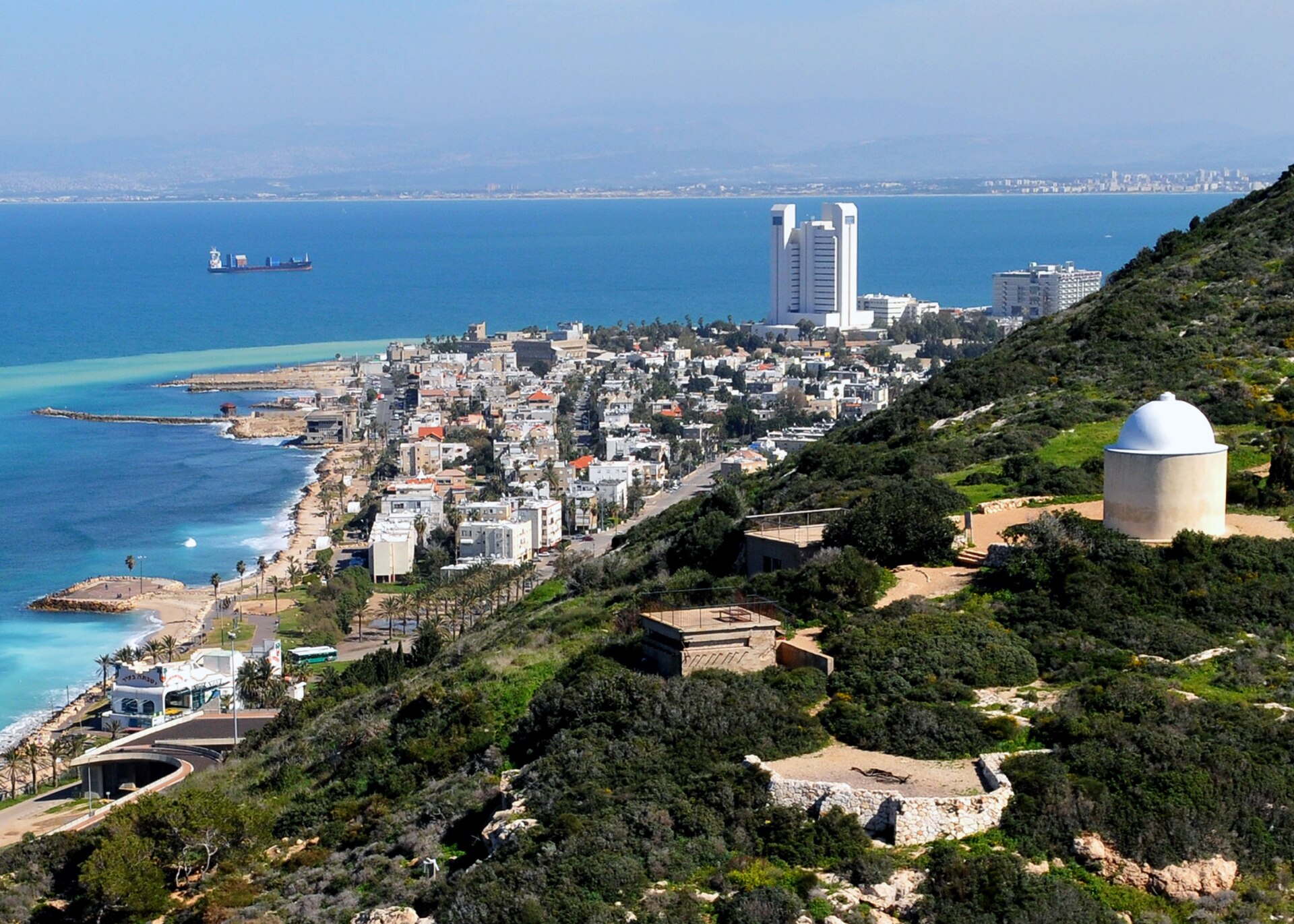
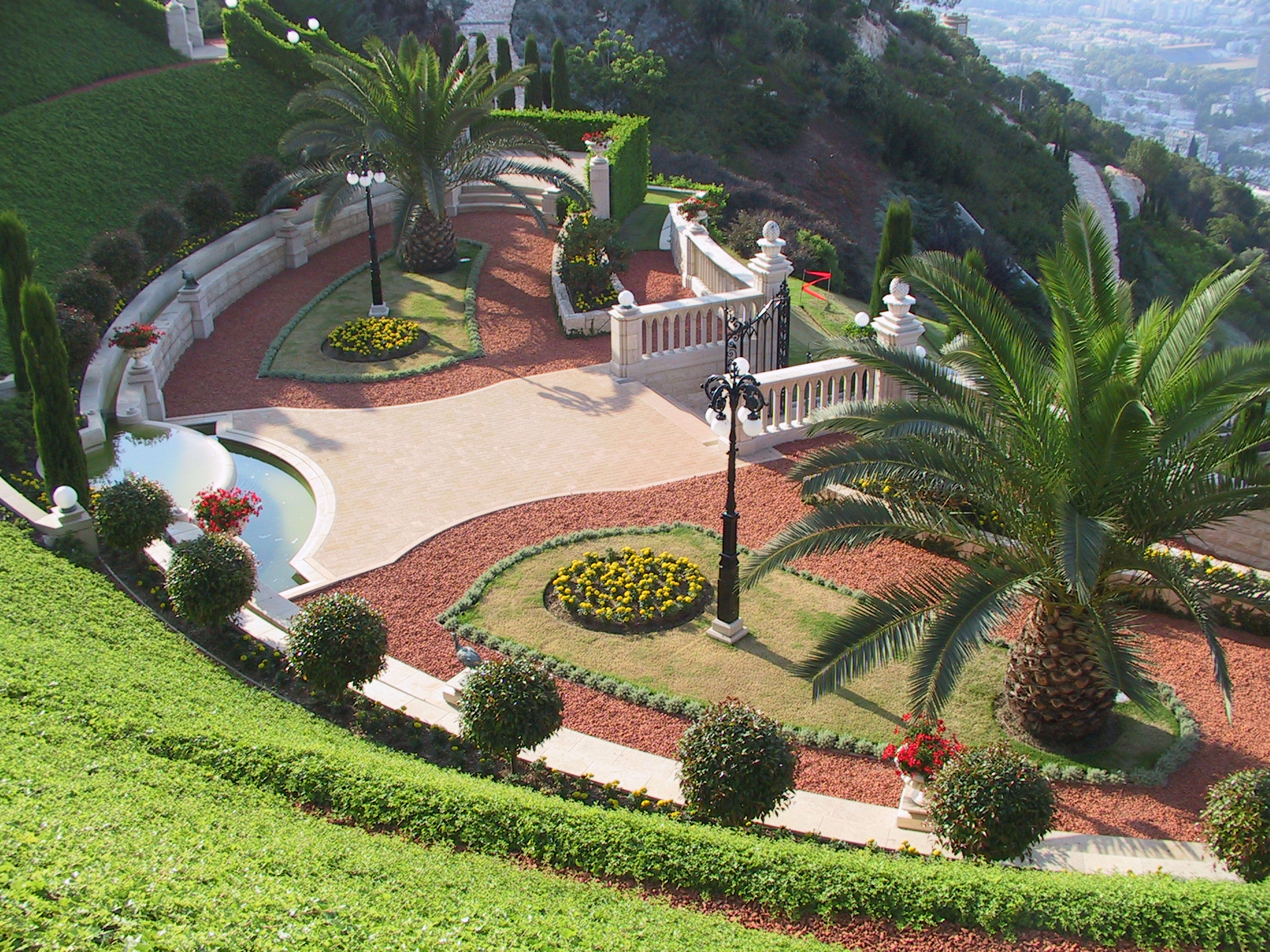
Numbeo's crowdsourced indices score Haifa "very high" across quality of life, purchasing power, safety and climate (2026). These are self-reported and directional, not official statistics, but they line up with the affordability and safety data. The one clear negative, pollution, is precisely what the bay closure is built to solve.
Cost of living runs ~17 to 25% below Tel Aviv depending on the basket, and rent is roughly half (a central apartment runs ~$870 in Haifa against ~$1,665 in Tel Aviv). The climate is Mediterranean Csa: ~20.3°C annual mean, long dry summers, mild winters.5,24
Honesty first: Haifa's petrochemical bay left a real health legacy, documented in peer-reviewed cohorts. What makes the city investable is that the legacy is being actively dismantled, the air is already measurably cleaner, and a world-class medical and academic core is taking industry's place.
The shoreline at golden hour, the city's other face. Photo: Marco Plassio / CC BY-SA 3.0, via Wikimedia Commons
Rambam (1,100 beds) is northern Israel's referral hospital and home to the world's largest underground hospital; Carmel and Bnai Zion add ~930 more beds. Mount Carmel National Park, ~10,000 hectares and a UNESCO biosphere reserve, sits on the city's doorstep. The clearest precedent is Pittsburgh's pivot from heavy industry to an "eds-and-meds" economy, with the honest caveat that health gains lag physical remediation.15,28
A builder movement has to be honest about red tape. Israel makes it fast and cheap to open a company but drags on bureaucracy and permitting, and Haifa has specific tools that cut against that.
The bay redevelopment shows the friction directly: the closure slipped from 2029 to 2031, and after the June 2025 Iranian strikes the planning council let Bazan rebuild a gas facility without a standard permit, over neighboring cities' objections. Big things happen here, slowly and contested. A movement that ships small, deployable citizen tools routes around exactly this.27
The retraining effort is not a fantasy line item. Benchmarked against real programs, here is what it costs, who pays, and who runs it. A blended model mixes light AI-literacy for the many with a deeper "build with AI" track for those who will ship.
| Cohort | Blended cost (with wrap) | Shekels (NIS 3.05 = $1, Jul 2026) | Share of Haifa workforce |
|---|---|---|---|
| 1,000 residents | ~$3.0M | ~NIS 9M | ~0.7% |
| 5,000 residents | ~$14.8M | ~NIS 45M | ~3.5% |
| 10,000 residents | ~$29.6M | ~NIS 90M | ~7% |
The reference check: the full 10,000-person program (~$30M) is smaller than a single existing Israel Innovation Authority funding wave (NIS 139M for 9,000 people). This is fundable at Israeli scale, today. Per-learner: ~$800 for light AI-literacy, ~$3,000 to $12,000 for the deep build track, blended to ~$2,960 with program overhead.8
Cost model is a defensible desk estimate from public benchmarks (San Jose, Amazon upskilling, US and Israeli bootcamps, IIA grant ceilings). The 70/30 light-to-deep split, the 18% program wrap and the FX (NIS 3.05 = $1, July 2026) are stated assumptions; change them and the totals move. Not a quote. See the full cost model →
A repricing thesis needs capital to be arriving, not merely deserved. Since the war, the north has become one of the most heavily capitalised regions in Israel, and almost none of it is priced into how the market talks about Haifa. These are committed or under-construction figures, labeled by how firm each one is.
| Capital flow | Size | Status | What it does |
|---|---|---|---|
| North / Galilee government package | ~NIS 22B (~$6.3B) | Budgeted | NIS 4B Galilee plan (2026-30) on top of ~NIS 18B for northern communities: housing, employment, transport, health. Regional, with Haifa as the metropolitan anchor41 |
| Haifa to Tel Aviv high-speed rail | ~$4.6B | Under construction | Israel Railways' most expensive project ever. Broke ground Dec 2024, targeted 2029, ~30 minutes to Tel Aviv33 |
| Nvidia and Mega Or server farm, Mevo Carmel | ~NIS 4.84B (~$1.5B) | Announced Dec 2025 | Israel's largest-ever server farm, ~64 MW, next-generation Blackwell chips, in the Mevo Carmel industrial zone. Separately, Nvidia is expanding its Yokneam offices by ~15,000 sqm42 |
| NofIt light rail, Haifa to Nazareth | ~€2B | Financial close Jul 2026 | 41km, 20 stations, ~100,000 riders a day, targeted 202832 |
| Nvidia Kiryat Tivon campus | "Multibillion-shekel", undisclosed | Projection | 160,000 m², construction 2027, occupancy 2031, ~8,000-10,000 jobs, 20 minutes from Haifa27 |
| Haifa Bay redevelopment | No published total | Plan approved | The largest transformation of all: 130,000 homes and ~560,000 jobs on the freed refinery land27 |
Honest labels matter here. The ~$6.3B is a North and Galilee package, not a Haifa line item, though Haifa is the metropolitan anchor that absorbs it. The $1.5B Nvidia figure is the Mevo Carmel server farm, not the Kiryat Tivon campus, whose spend Nvidia has declined to disclose beyond "multibillion-shekel". And the Haifa Bay plan has no published aggregate investment figure, so we quote its housing and jobs targets rather than invent a total.
Why this is the most underpriced dimension: roughly $12B and more in identifiable, committed or under-construction capital is landing in and around Haifa this decade, before counting the Bay megaproject or the Nvidia campus. Capital of that scale reprices a city. It has not yet repriced this one.
The thesis is sound and the payoff is patient. These are the dated, state-backed events the market has not yet priced. All are funded or under construction.
IAI and Rafael enter Haifa's Science and High-Tech Park for the first time. Haifa's positioning as a defence-tech centre is widely reported in trade coverage of those moves, though we have not located a dated council resolution stating it as formal municipal strategy, so we do not present it as one. The Haifa Economic Corporation development budget sits near NIS 115M.31
The NofIt light rail linking Haifa and Nazareth is targeted to open: an Alstom-led project valued at roughly €2B at financial close, 41km and 20 stations, carrying an estimated 100,000 riders a day. Financial close was reached in July 2026, so this is funded and moving.32
Israel's first true high-speed line is targeted to open, cutting Haifa to Tel Aviv to about 30 minutes at up to 250 km/h. A ~$4.6B project, Israel Railways' most expensive ever, broken ground in December 2024. It turns Haifa into a viable commuter base at roughly 62% of Tel Aviv's apartment price.33
The Bazan refineries close under Resolution 1231, unlocking the bay for up to ~130,000 homes and 560,000 jobs. The timeline has slipped once, and relocating rather than closing Bazan is now on the table.27
Startup Genome ranks Tel Aviv the 4th-strongest startup ecosystem on earth and does not separate Haifa at all. Kearney, Savills and JLL fold it into "Israel" or "Tel Aviv." StartupBlink does break the city out, at #185 globally and #3 in Israel, but it scores startup activity: company counts, funding, ecosystem density. None of these instruments scores the fundamentals this Index is built on, which are retrainability, capital inflow, cost base and livability. On the question of whether this workforce can absorb the AI shock, there is no incumbent measure. That absence is the reason this document can exist, and the reason it becomes the reference the moment it is credible.34
Everything in this Index points to one move. Haifa is a workforce that already has the degrees, the technical habits and the English, sitting in a city that is cheap, high quality of life and about to be physically rebuilt. What it needs is a way to convert that latent capacity into people who actually build with AI, and a reason for them to build it here.
That is not an abstract proposition. It is the exact transition its author lived: from a corporate career across three CHRO seats into building and enabling with AI, tool by tool, in public. Build Haifa is that pivot run at city scale, with the numbers to prove the city can do it and the partners to fund it. The research arm proves the "bones." The retraining engine turns residents into builders. The capital and opportunity arms route money and people back in. One person's transition, made into a movement.
The largest catalysts land 2028 to 2035, and the refinery closure has already slipped from 2029 toward 2031. This is patient money.27
Iranian strikes hit the Haifa refineries in June 2025, and high-tech workers make up roughly 20% of IDF reservists, about double their share of the workforce, suppressing the effective workforce even where the latent pool is large.11,27
18.2% of Technion PhD graduates lived abroad in 2024, and Israel was in net emigration in 2025. Reversing this is the movement's hardest promise and its central metric.22,35
Haifa's tech identity leans heavily on Intel, which is contracting globally. A design cluster with a single dominant anchor carries single-point-of-failure risk.13,19
Numbeo's pollution index remains "high" at 66.8 (2026). The 56% VOC cut, measured 2015-2018, is real and closure will help, but the air is cleaner, not clean.5,7
This Index is the evidence base for a movement to retrain Haifa to build with AI. It is built to be used, in two ways.
Founding sponsors back the Index and the retraining pilot it makes the case for. We are seeking a founding economic-development anchor alongside civic and mission-aligned funders. No institution has been approached for, or has given, any commitment, and none is named here without its agreement. If you want to sponsor the Index or fund a first cohort, that is the conversation. Get in touch below.
The program that turns this evidence into builders is Citizen AI: a plan to teach displaced and mid-career adults, olim and non-engineers to build with AI. See it at buildhaifa.org →